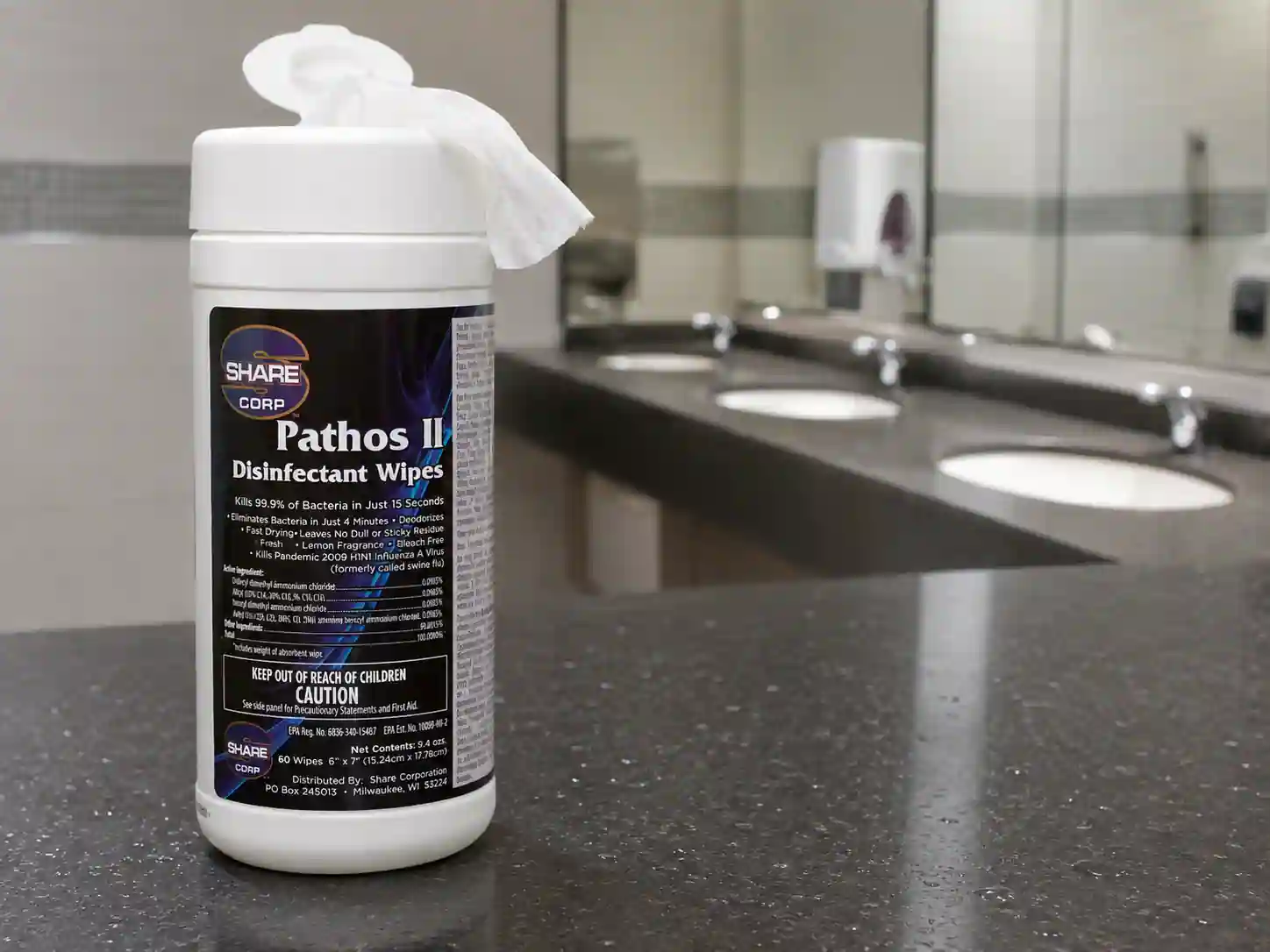
PATHOS II
General Purpose Disinfecting Wipes

What it's for
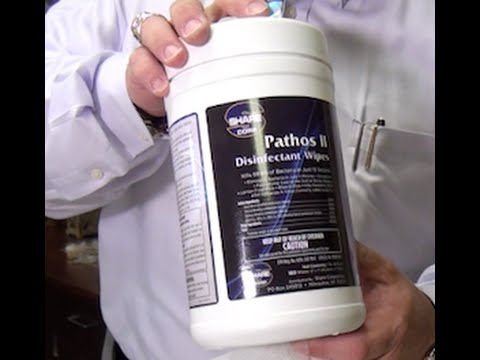
PATHOS II is the touchpoint tool. The product page describes it as a "broad spectrum, general use quaternary disinfectant" wipe "for use on hard, non-porous surfaces," used to "effectively clean, disinfect and deodorize, hard, inanimate surfaces." One product does the cleaning step and the disinfecting step, and the label states you do not need to rinse — wipe until visibly wet, hold the wet time, and let it air dry. The formula is phenol-free, alcohol-free, bleach-free and non-staining, and it is VOC compliant, which is why it goes on the surfaces people actually touch all day instead of in a mop bucket.
Diaper tables and diaper pails Highchairs, toys, cribs and cots Doorknobs, light switches and changing-area counters
Desks, tables and chairs Computer keyboards and door hardware Cafeteria tables, lab benches and locker-room fixtures
Equipment tables and tanning beds Shower and tub walls, glazed tile Bathroom fixtures, sinks, faucet handles and toilet seats
Desks, counters, cabinets and cupboards Refrigerator exteriors, garbage cans, shopping cart handles, stoves, sealed floors Food contact surfaces must be rinsed with potable water after disinfecting
Effective against
How to use it
The label wording is "Wipe hard, nonporous surface with wipe until surface is visibly wet. Allow surface to remain wet for 4 minutes." The surface has to stay visibly wet for the whole time — if it dries early, use another wipe. Longer times apply to Candida albicans (8 minutes) and to Norwalk / Norovirus / Feline Calicivirus / Rotavirus (10 minutes). Sanitizing is 15 seconds.
1. If the surface is heavily soiled, clean it first.
2. Wipe the hard, non-porous surface until it is visibly wet.
3. Keep the surface wet for the required time — 4 minutes for general disinfection, 8 minutes for Candida albicans, 10 minutes for Norwalk, Norovirus, Feline Calicivirus and Rotavirus. Use more wipes if it dries early.
4. Let the surface air dry. No rinsing is required on ordinary surfaces.
5. On food contact surfaces, rinse with clean, potable water after disinfecting.
6. For sanitizing, use enough wipes to keep the surface wet for 15 seconds.
7. For the HIV/HBV/HCV bloodborne-pathogen procedure, pre-clean the surface first, then leave it wet for 1 minute for HIV-1.
8. For mold and mildew control, repeat the application every seven days, or sooner if growth reappears.
9. Do not flush wipes down the toilet. Discard used wipes in the trash.
- Soft or porous surfaces — the label claim is limited to hard, non-porous surfaces
- Food contact surfaces left unrinsed — rinse with clean, potable water after disinfecting
- Unsealed stone, unfinished wood and unsealed grout are not on the label's safe list; test an inconspicuous area first
- Do not flush the wipes — they go in the trash
- Do not reuse or refill the canister; it is a nonrefillable container
Works with
Questions directors ask
Yes. It is registered, with a printed organism list and stated contact times. Keep the label PDF and the SDS on file with the canister. The one thing to have your staff repeat back is the wet time — a wipe that dries in 40 seconds has not disinfected anything.
Manufactured by Share Corporation, Milwaukee, WI. Sold, delivered and supported by Greg Watkins. Product issue? Call Greg first — 214-906-5476.
How the relationship works →Add it to a quote, or ask me whether it's the right call.
Pricing is quoted per facility based on volume and delivery. I reply within one business day.