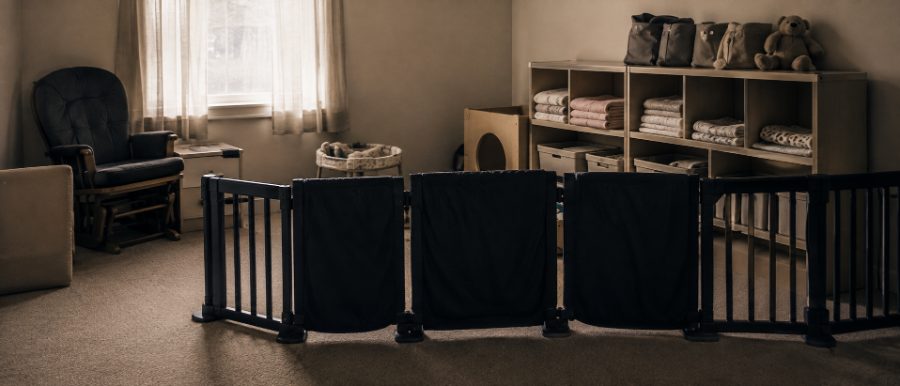
A nursery used hard for three hours a week, cleaned by volunteers with no training.
That's the actual problem, and it's not a product problem. It's that the person wiping the changing table on Sunday is a different person every week, and nobody has ever shown any of them how.
So I build church programs around products that are hard to use wrong, and I come train whoever shows up.
A child may only be in care up to four and one-half hours per day — the exemption cap under 26 TAC §745.117.
12 hrs
Up to 12 hours per week. Sunday morning plus a Wednesday night sits comfortably inside that.
0
An exempt church nursery has zero state sanitation standards.
12 mo
A sanitation inspection before your permit and at least every 12 months once you cross into licensing.
What applies to you
What actually applies to you
The honest answer is: probably less than you think, and that's the risk.
Your nursery is likely exempt from state licensing
Texas Human Resources Code §42.041(b)(3) exempts a facility operated in connection with a religious organization "where children are cared for during short periods while parents… are attending religious services… on or near the premises," provided you don't advertise as a child-care facility and you inform parents you are not licensed by the state.
"Short periods" has hard numbers. 26 TAC §745.117 sets them out in an attached figure; in substance (this is my summary, not the rule's wording):
01
4.5 hrs
A child may only be in care up to four and one-half hours per day.
02
12 hrs
Up to 12 hours per week.
03
At all times
Caregivers must be able to contact the parent at all times.
(A 15-hour variant exists, but it is much narrower than "border counties" — it requires that the care be provided so a parent may attend an educational class offered by a nonprofit, in a city of 500,000 or more, in a county adjacent to an international border. Assume it doesn't apply to you unless all three are true.)
Sunday morning plus a Wednesday night sits comfortably inside that.
Vacation Bible School has its own exemption under §42.041(b)(4): religious instruction lasting two weeks or less, conducted during the summer.
"You can operate your program legally without receiving a license from us. We do not require you to comply with our statutes, rules, and standards."
Read that again. An exempt church nursery has zero state sanitation standards. No required sanitizing schedule. No annual inspection. No toy rule.
That is not good news. It means there is no floor — and no state standard to point to when a parent asks why their infant came home with hand-foot-and-mouth. The liability sits entirely with the church, and "we weren't required to" is not a defense anyone wants to make to their own congregation.
The churches I work with hold themselves to the licensed-center standard voluntarily. Not because Texas makes them. Because it's a nursery full of infants and it's the right number to hit.
When you cross the line, everything changes at once
Add a Mother's Day Out, a preschool, or extended care and you can lose the exemption fast. A program running 9am–2pm two days a week is 5 hours a day — already over the 4.5-hour daily cap.
Sanitation inspection before your permit and at least every 12 months §746.3401
There's also a separate exemption for a church-run school (§42.041(b)(11)) — but custodial, non-instructional care is capped at two hours per day. A church pre-K that adds a three-hour extended-care wing has a problem.
Don't guess on this
The statutory definition and the rule-level permit criteria aren't phrased identically, and I'm a chemical guy, not your attorney. If you're near the line, request a written exemption determination from HHSC under 26 TAC §745.131. I'd rather you ask them than take my word for it.
29 CFR §1975.4(c) covers churches as employers whenever they "employ one or more persons in secular activities." Clergy and worship participants — musicians, ushers, choir — are excluded. A paid custodian is not. Where OSHA attaches, so do HazCom (SDSs, secondary container labels, training) and, where blood exposure is reasonably anticipated, bloodborne pathogens. The consumer-product exemption won't cover concentrated janitorial chemistry used all week.
Health & Safety Code §437.007 bars a county or public health district from requiring a permit of a nonprofit. Note what it doesn't say: it doesn't mention cities. A church inside city limits may still face a municipal permit, and the exemption is from the permit, not from sanitation rules. Check with your city.
CDC · CONGREGATE SPACES
Cleaning regularly is usually enough
CDC guidance for congregate spaces is more measured than most vendors admit: "In most situations, cleaning regularly is enough." Target disinfection at restrooms, diaper changing tables, and illness events. I'm not going to sell you a disinfectant for the sanctuary pews.
Five products
Your starter program
Built around one constraint: it has to work in the hands of a volunteer who has never been trained.
The single most important product on this page. A wipe cannot be mixed wrong. There is no dilution, no ratio, no measuring cup. A volunteer who has never met you can use it correctly on the first try. Phenol-free and bleach-free means no ruined clothing and no fumes in an infant room.
Case pack6 canistersSpecContact time [LABEL: Greg to confirm] · [VERIFY kill claims against master label]
For your paid staff or your regular Monday cleaning crew — the people who can be trained on a dilution station. Nursery floors, tables, toys, restrooms, fellowship hall. Neutral pH won't harm sealed wood or terrazzo.
Dilution [LABEL: Greg to confirm] · Contact time [LABEL: Greg to confirm]
Nursery accidents, the toddler who didn't make it, the fellowship hall spill. Solidify it, sweep it, disinfect. Keep a container in the nursery closet where a volunteer can find it without asking.
Nursery sinks, restrooms, kitchen. Foaming stretches further and kids use it. Handwashing does more for your nursery than any disinfectant on this page.
Pew cushions, nursery rockers, youth room furniture, the sofa in the college ministry room that nobody wants to talk about. Fabric is where church buildings actually smell, and it's the one surface most janitorial programs ignore.
Add on:DYNASTY MICRO BC for floor drains and restroom odor at the source — useful in a building that sits empty six days a week and gets dry traps.
Print it, tape it up
Your cleaning schedule
Two columns, because your building has two rhythms: hard use on Sunday, empty most of the week.
Every service — nursery and children's areas
Task
Product
Who
Changing surface after each diaper
PATHOS II
Volunteer
Mouthed toys → set-aside bin
—
Volunteer
Set-aside bin cleaned before next service
NU-QUAT or PATHOS II
Staff
Tables and high chairs after snack
PATHOS II
Volunteer
Restroom fixtures and handles
PATHOS II
Volunteer
Check every soap dispenser
AROMA FOAMA BERRY
Volunteer
Accident cleanup
EXTRA-SORB → NU-QUAT
Whoever's there
Post this in the nursery. One page. Volunteers who've never been trained will follow a list on the wall.
Weekly — regular cleaning crew
Area
Product
Nursery floors, cribs, rockers, gates
NU-QUAT
All nursery toys (not just mouthed)
NU-QUAT
Nursery linens, crib sheets, blankets
Machine wash
Sanctuary and hallway high-touch — door handles, pew ends, rails
NU-QUAT
Restrooms, full
NU-QUAT
Fellowship hall tables and kitchen surfaces
NU-QUAT
Fabric — pews, rockers, youth furniture
SHA-BRZ
Floor drains
DYNASTY MICRO BC
Monthly / seasonal
Full nursery reset: every toy, every soft surface, every crib mattress.
Before VBS and before the fall program year: full children's-wing deep clean.
Restock the nursery closet so a volunteer never has to hunt.
Run water in every floor drain — dry traps are why an empty building smells.
Straight answers
Questions I get
Probably not, if children are only in care while parents are on the premises and it's under 4.5 hours a day and 12 hours a week. Add a Mother's Day Out and you may cross the line — a 9-to-2 program already exceeds the daily cap. Get a written determination from HHSC rather than guessing.
No. 26 TAC §745.111 says the state doesn't require you to comply with its standards. Which is exactly why I'd encourage you to adopt the licensed-center standard anyway — there's no regulatory floor protecting you or the church.
To worship, no. To secular employment, yes — a paid custodian makes you a covered employer for that person. Volunteers generally aren't employees, but if you have paid staff handling chemicals, you owe SDSs, labeled secondary containers, and training.
I'd rather they didn't. That's why PATHOS II is the first product on the list. Concentrates belong with the people you can train and re-train; wipes belong in the hands of a volunteer you'll meet once.
Check the floor drains first — a building empty six days a week gets dry traps, and the smell comes up from the sewer. Then check fabric. It's almost never the hard surfaces.
Let me walk your building. It's free, and it takes about an hour.