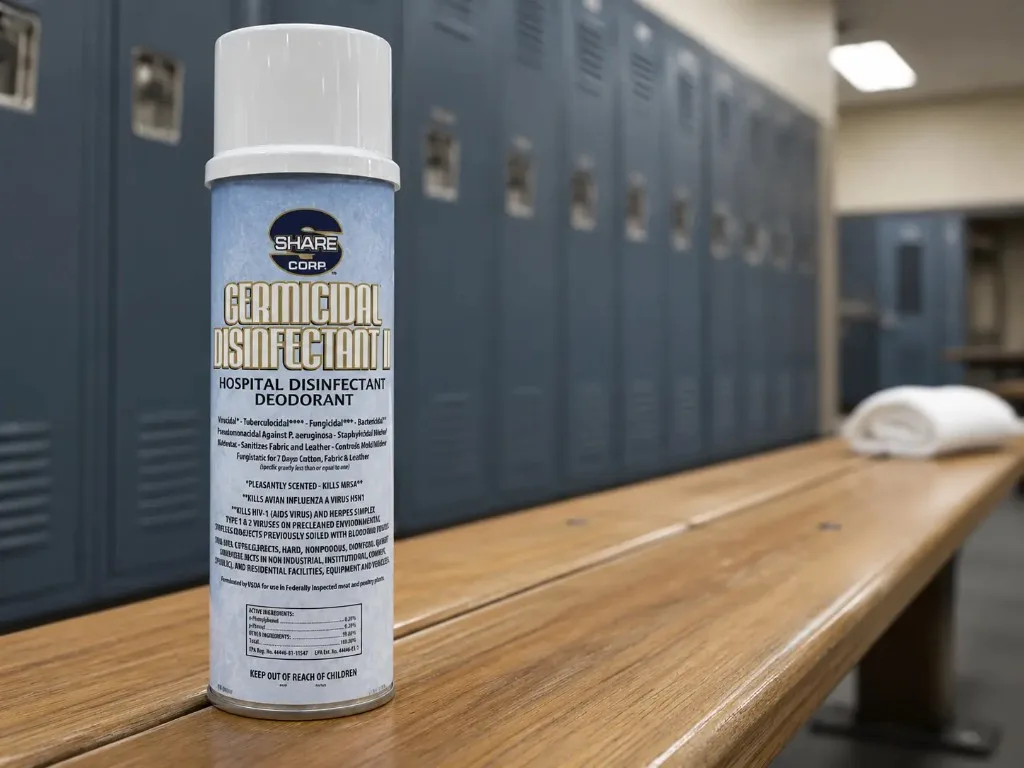
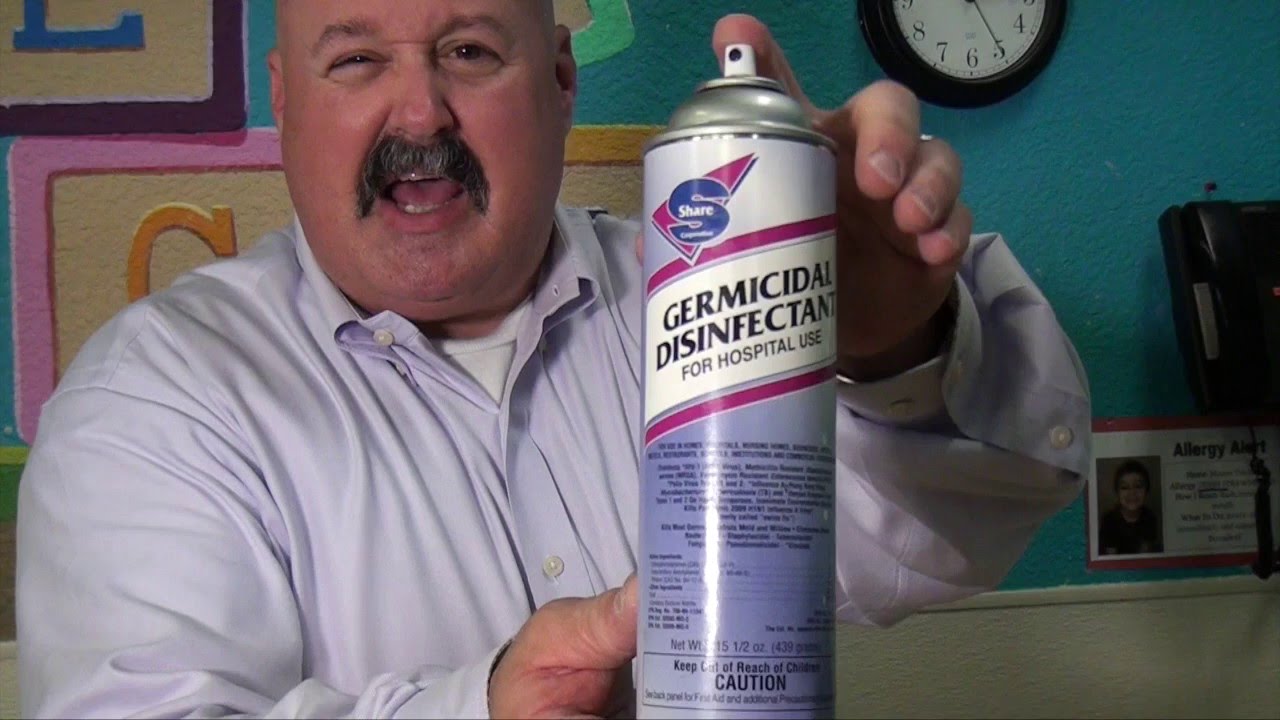
This is the aerosol in the line. You spray from 6 to 8 inches, keep the surface visibly wet for the contact time, and let it air dry. There is nothing to mix. The registered label carries four separate claim sets — virucidal, bactericidal, tuberculocidal and fungicidal at 10 minutes — plus a 5 minute sanitizing claim and a 5 minute mold and mildew claim that holds for up to 7 days. The actives are 2-phenylphenol at 0.20% and ethanol at 53.00%; the high ethanol content is why it dries fast, why it is flammable, and why the surface list has real exclusions.
Cots, nap mats and vinyl-covered pads, with children out of the room Restroom fixtures and toilet rims on the daily close-out Damp storage and nap rooms, using the 5 minute mold and mildew treatment
In schools
Locker rooms, wrestling mats, helmets, pads and gym shoes Bus seats and other upholstered or porous items a wipe cannot reach Restrooms, including the toilet and urinal directions on the label
In gyms & churches
Shared athletic equipment and mats, where the Trichophyton (athlete's foot) fungicidal claim is the point Nursery and multi-use rooms between services Curtains, cot storage and damp corners
In offices & restaurants
Upholstered chairs, fabric partitions and break-room hard surfaces Restrooms and back-of-house Food-preparation areas only after the label conflict is resolved with Share — see compliance notes
Effective against
OrganismContact timeDilution
Human Immunodeficiency virus Type 1 (HIV-1)10 minRTU aerosol
NOTEAll organisms are claimed on the ready-to-use aerosol — there is no dilution. Treated surfaces must remain visibly wet for the stated time.
NOTEClaim headings on the label: VIRUCIDAL, BACTERICIDAL, TUBERCULOCIDAL, FUNGICIDAL, plus SANITIZES and DEODORIZES.
NOTEMold and mildew: at 5 minutes contact the label states it "completely inhibits the growth" of Aspergillus niger and Penicillium glaucum fungi for up to 7 days. Repeat application every 7 days.
NOTESARS-CoV-2 is not in the virucidal organism list. The 3 minute figure appears in the directions under a dagger footnote marker and must be presented that way.
NOTENo organisms outside this list are named. Specifically checked and not present on this label: Listeria, Enterobacter, Proteus, Serratia, Corynebacterium, Legionella, Campylobacter, Bordetella, Norovirus, Rhinovirus, Rotavirus, Hepatitis, Respiratory Syncytial Virus, Poliovirus, Candida albicans.
How to use it
Dwell time — the number that matters
10minutes
The surface has to stay visibly wet for the full time — 10 minutes for all bacteria, viruses, TB and the fungicidal claim, 3 minutes for SARS-CoV-2, 5 minutes for the sanitizing claim and for mold and mildew control. If the surface dries before the time is up, spray again and restart the clock. Ethanol at 53% flashes off fast, so on a warm dry day expect to re-wet.
Directions
1. Shake the can. Hold it 6 to 8 inches from the surface.
2. Spray until the surface is thoroughly wet.
3. Keep it visibly wet for the contact time — 10 minutes for disinfection, 3 minutes for SARS-CoV-2, 5 minutes for sanitizing or mold and mildew.
4. Allow to air dry.
5. Food-contact surfaces — counters, appliances, tables: rinse with potable water after treatment. Do not use on utensils, glassware or dishes.
6. Toilets and urinals: spray to wet the surface above the water line, keep wet for 10 minutes, brush, allow another 10 minutes, then flush.
7. Mold and mildew: spray to thoroughly wet, hold 5 minutes, air dry, and repeat every 7 days.
✓ Safe on
Hard, non-porous surfaces in hospitals, ambulances, nursing homes, medical and dental offices, veterinary offices, schools, laboratories, hotels, restaurants, food establishments, offices, stores, factories, apartment buildings and homesIndustrial, institutional, commercial, medical and residential facilities, equipment and vehiclesPorous items under the sanitizing claim — mattresses, shoes, curtains and athletic equipmentToilets and urinals, per the specific label directions
△ What not to use it on
Waxed or polished surfaces
Water-based latex paint
Shellac
Cellulose (such as rayon) or other alcohol-sensitive materials
Utensils, glassware and dishes
Humans or animals — this is not a personal antiseptic
Areas where food is prepared, processed or stored (the same label also gives a potable-water rinse for food-contact surfaces; resolve before use in a kitchen)
Bleach
Ammonia products
Works with
PATHOS II
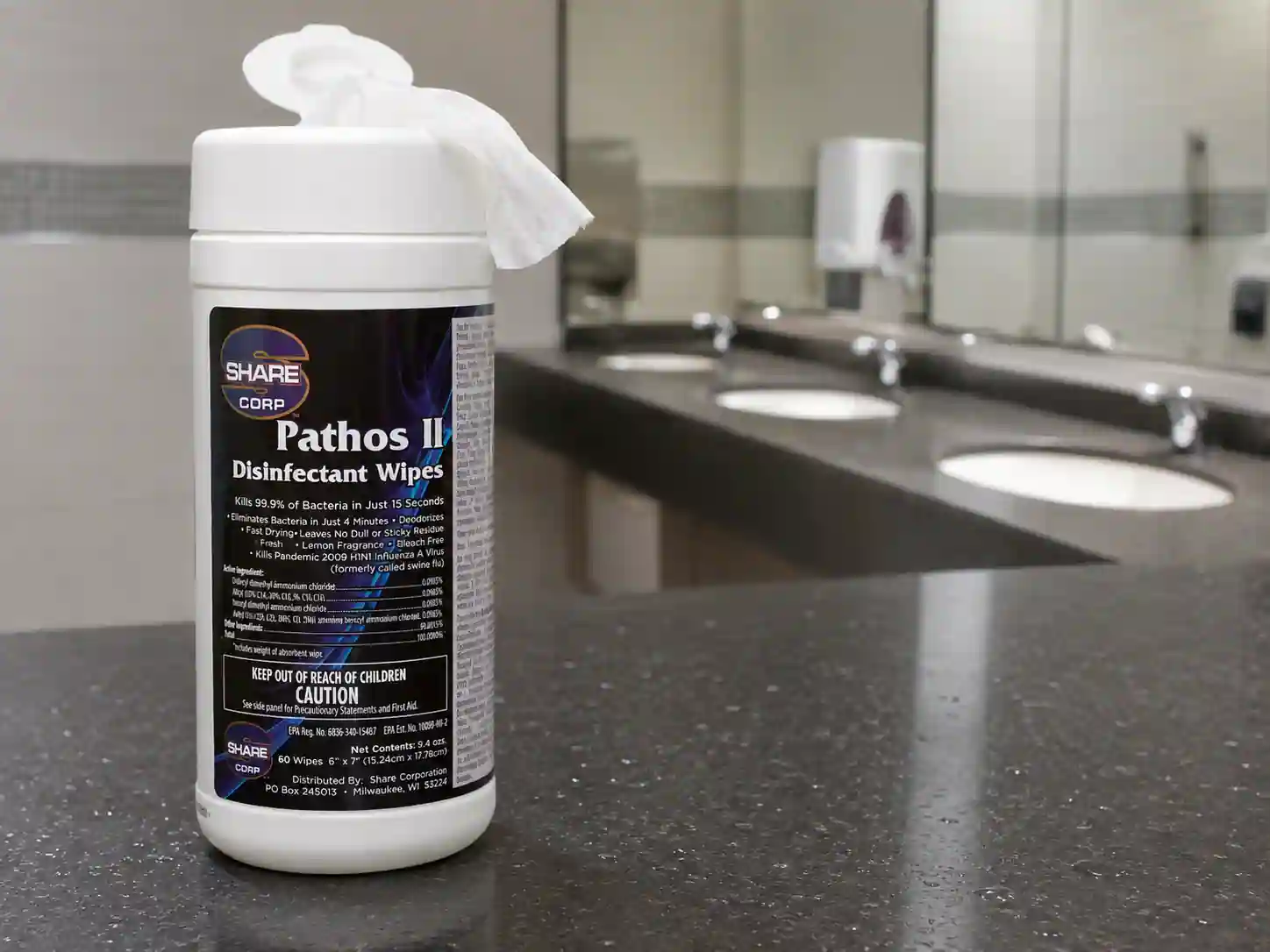
Disinfectant wipes for hard, non-porous surfaces. The wipe is the right tool for touchpoints where you do not want overspray drifting onto a waxed floor or a rayon curtain. The aerosol handles the porous items the wipe cannot.
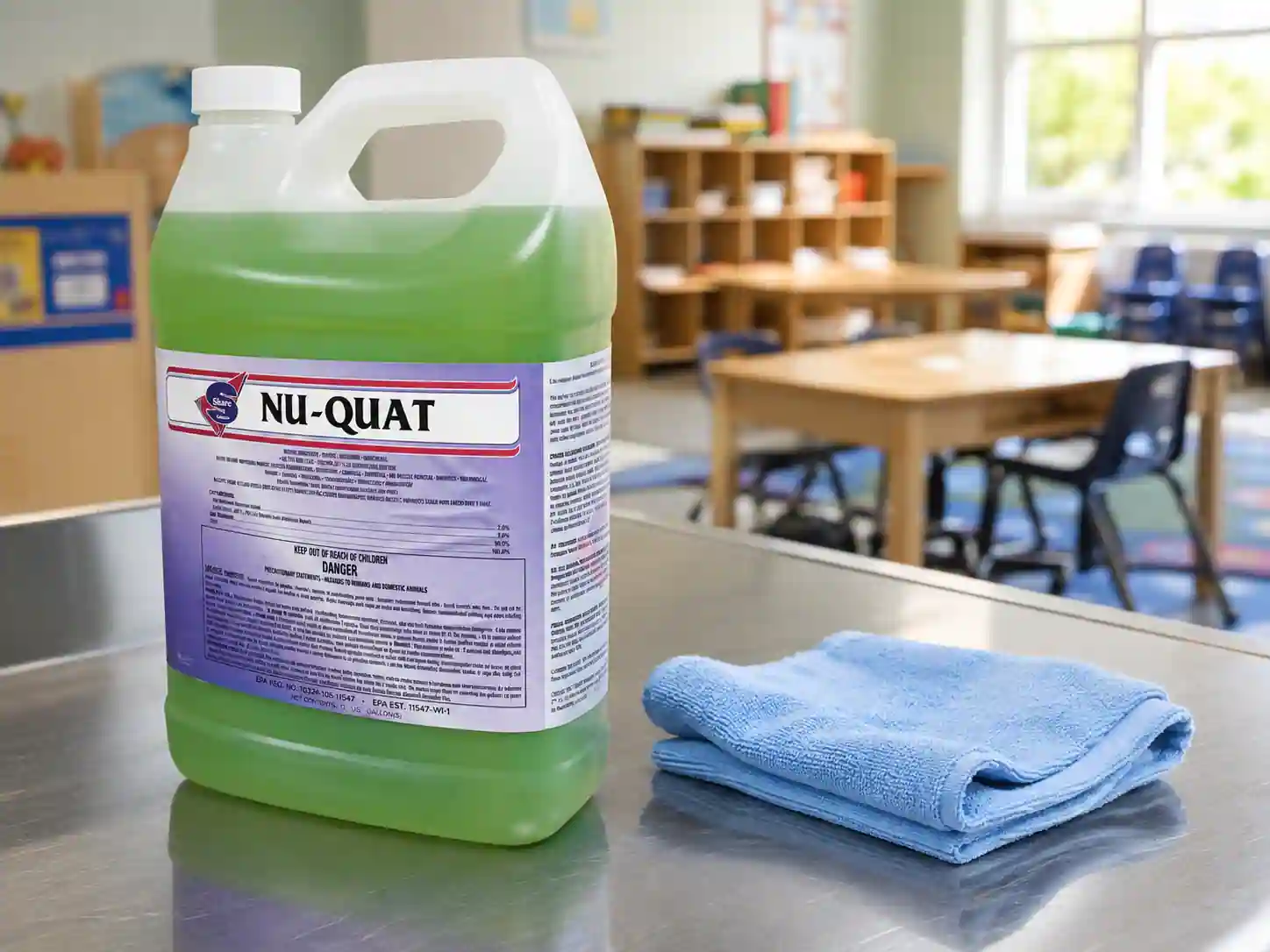
Neutral disinfectant cleaner concentrate. Use NU-QUAT for floors and large surface area at low cost per gallon, and keep the aerosol as the spot tool. Per square foot the can is expensive.
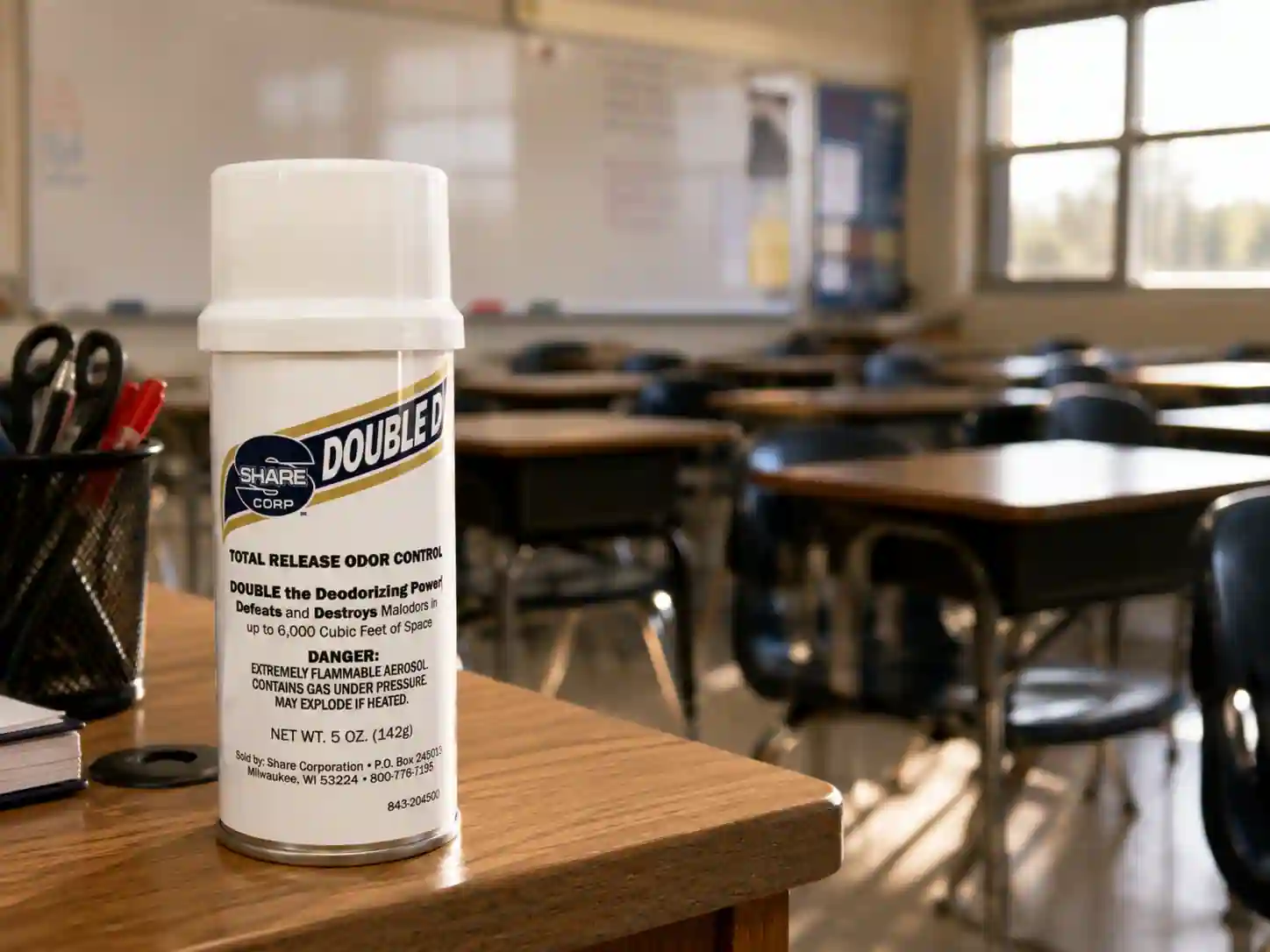
Total-release deodorizing aerosol. When the problem is the room's air rather than specific items, DOUBLE D treats the whole volume after hours. DOUBLE D carries no kill claims, so the two are not interchangeable.
Yes, on the strength of the label. It is registered with virucidal, bactericidal, tuberculocidal and fungicidal claims, and it names MRSA and Mycobacterium tuberculosis bovis BCG explicitly. Keep the label and the SDS on site, and hold the 10 minute contact time — that is the number an inspector will ask about.
Spray with the room unoccupied and ventilated. It carries a WARNING signal word, causes substantial but temporary eye injury, and is harmful if absorbed through skin, so the person spraying needs eye protection and gloves. It is also 53% ethanol and flammable — no open flame, no pilot lights, no smoking. Let treated surfaces dry before people return, and store the cans locked up below 122 F.
Two things. First, the claim set: this label carries a tuberculocidal claim against Mycobacterium tuberculosis bovis BCG and names MRSA, which most retail cans do not. Second, the porous-item sanitizing claim at 5 minutes for mattresses, shoes, curtains and athletic equipment. The trade-off is the ethanol content — it will damage waxed finishes, latex paint, shellac and rayon, which a water-based retail aerosol generally will not.
Coverage per can is not published, so nobody can give you a square-foot number. Order a small quantity first, time a real cleaning cycle, and scale from that. Remember that the surface has to stay visibly wet for a full 10 minutes, so a realistic can will not go as far as it looks like it should.
No. The plain-named product is gone — it has no label, no SDS and no item number on sharecorp.com and no longer appears on the disinfectants index. This is the replacement. If you have old cans on the shelf, they are not covered by the documents on this page: different formula, different actives, different registration. Pull them and call Share at 1-800-776-7192 for disposal guidance.
StorageCool, dry, locked area away from heat and ignition sources (label). SDS adds: store in a well-ventilated place, protect from sunlight, do not exceed 50 C / 122 F. Label warns exposure above 130 F (54 C) may cause bursting.
Causes substantial but temporary eye injury. Harmful if absorbed through skin. Do not get in eyes or on skin or clothing. (label)
Flammable. Contents under pressure. Keep away from heat, sparks, pilot lights, and flames. Do not puncture or incinerate container. Exposure to temperatures above 130 F (54 C) may cause bursting. (label)
SDS classification: Flammable Aerosol 2, Pressurized Gas (liquefied), Eye Irritant 2A, STOT SE 3. H-codes H223, H280, H319, H335, H336.
Transport: UN1950, Class 2.1 flammable gas.
PPE
Protective eyewear — goggles, face shield or safety glasses
Chemical resistant waterproof gloves
Long-sleeved shirt, long pants, shoes and socks
Wash hands thoroughly after handling and before eating, drinking, chewing gum, using tobacco or using the toilet
Remove and wash contaminated clothing before reuse
First aid
Eyes. Hold eye open and rinse slowly and gently with water for 15 to 20 minutes; remove contact lenses after the first 5 minutes, then continue rinsing; call a Poison Control Center or doctor.
Skin. Take off contaminated clothing; rinse skin immediately with plenty of water for 15 to 20 minutes; call a Poison Control Center or doctor.
Ingestion. Not printed on the registered label. SDS: call a poison center or doctor if you feel unwell.
Inhalation. Not printed on the registered label. SDS: remove to fresh air.
Use outdoors or in a well-ventilated area; avoid breathing vapors. Store in a cool, dry, locked area inaccessible to children, away from heat and ignition, protected from sunlight, and never above 50 C / 122 F. Empty cans go in the trash or to aerosol recycling; partly filled cans go to the local solid waste agency or 1-800-CLEANUP.
Who you're buying from
Manufactured by Share Corporation, Milwaukee, WI. Sold, delivered and supported by Greg Watkins. Product issue? Call Greg first — 214-906-5476.